
Wilbur Ferreira

Software engineer in Ottawa. I build software people can rely on, from secure cloud platforms to AI that runs offline on your phone.

The long way here

More than ten years of building software, from São Paulo to Ottawa, in three languages. Much of it where security and data couldn't fail: guiding teams, coordinating with others, and explaining the risks to managers and executives.

  1. Ink sketch of a school desk and chair with an old computer, books and a mug of pencils.

    First code

    São Paulo, Brazil · 2013

    A local IT course taught me to code. Soon I was building websites for other companies, and I haven't stopped since.

    Java, JavaScript, HTML and CSS; my first websites.

  2. Ink sketch of tall city towers with a commuter train crossing a viaduct.

    Other people's offices

    São Paulo · 2016–2020

    For five years, a staffing firm placed me inside client companies, building the systems their work ran on. I turned their needs into specs, then designed, built, tested and maintained the software and the data behind it, guiding teams with Scrum.

    Requirements and specs, system design and testing; data models, data cleaning, statistics and machine learning; Scrum and Agile.

  3. Ink sketch of an old monitor with a line chart, next to a folded newspaper and a coffee cup.

    Software and data

    UOL, São Paulo · 2020–2021

    At UOL, the data was sensitive and the products depended on it. As software engineer and data scientist, I built the predictive models, designed the data models behind architecture decisions, and kept access locked down with OAuth.

    Java and Quarkus services with OAuth, on AWS and Kubernetes; Jenkins CI/CD; PostgreSQL, MySQL and MongoDB; predictive models.

  4. Ink sketch of an old iron key resting against a padlock on a chain.

    Keys and doors

    Red Hat (Brazil), remote · 2021–2022

    When US defence and government customers couldn't sign in or a server went down, their security was on the line. I assessed the risk, then patched, upgraded and recovered their systems with customer and internal teams. Banks and government entities also came to me for advice.

    Red Hat Single Sign-On (OpenID Connect, OAuth 2.0, SAML, two-factor), JBoss EAP, OpenShift, LDAP, Kerberos, TLS certificates.
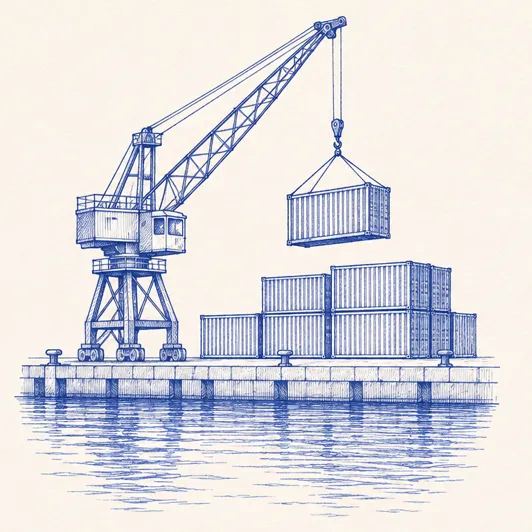
  5. Ink sketch of shipping containers stacked on a dock while a crane lifts another.

    The platform underneath

    Randoli, Toronto · 2022–2023

    I designed the Go services and Kubernetes operators behind the cloud platform Randoli's products run on, with security and cost in mind. Today their AI agent runs on it too. I also helped implement a reverse proxy for a UK bank.

    Go, Java and TypeScript microservices; Kubernetes operators in Go; Kafka; a reverse proxy on cloud tooling; CI/CD; single sign-on; AWS, Azure and GCP.

  6. Ink sketch of a suitcase with a maple-leaf luggage tag under falling snow.

    The move

    Brazil to Canada · 2023

    New country, new winters, same habit of testing everything. When I moved, Randoli kept me on, now as an employee in Canada.

    Working languages: English, French and Portuguese.
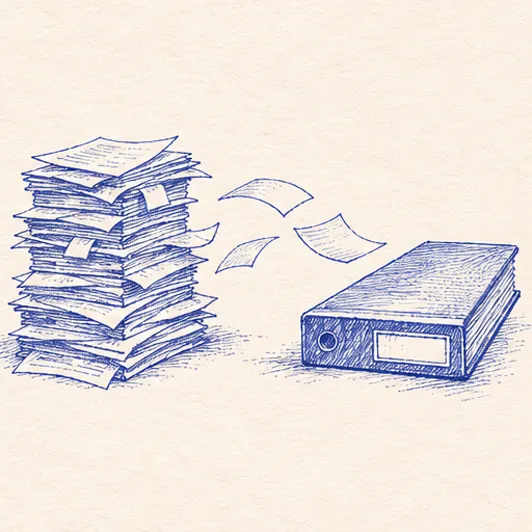
  7. Ink sketch of a messy stack of papers turning into one neat folder.

    Data people decide with

    House of Commons, Ottawa · 2024–now

    On the House of Commons IT Operations team, I build the data platform behind the reports managers decide with, from collecting and cleaning the data to the pipelines, the data warehouse, the data models and the dashboards. I spent my first year designing and building it on in-house servers. For the last year and a half I've been building it in Microsoft Fabric, a cloud data platform, moving the reports teams chose to keep and building much more that is new, machine-learning models included.

    Microsoft Fabric (data warehouse, ETL pipelines, data models, workspaces with per-team access), Power BI, SQL and Python; regression, clustering and neural networks.

  8. Ink sketch of an old phone propped against a mug under a desk lamp at night.

    Built for the community

    São Paulo and Ottawa · 2020–now

    Evenings and weekends, I build apps, agents and models that run on modest hardware, some fully offline. I write the spec and acceptance criteria, coding agents draft, and nothing ships until tests pass and I've reviewed every change. Two are live on Google Play.

    Flutter, Go and Python; on-device models with ONNX Runtime, sherpa-onnx and llama.cpp; agent memory and harnesses; AI coding agents.

Things I built lately

Built after hours, because I wanted them to exist. Several need no internet at all.

  • Ink sketch of an old phone with two speech bubbles above it and a tiny paper boat.

    Translaty

    Android app · on Google Play

    Speak, and it translates as you go, listening for several languages at once. Everything runs on the phone, even one from 2017.

  • Ink sketch of a paper form on a clipboard with checkmarks and a fountain pen.

    aia-prefill

    Open source

    Before the federal government lets software make a decision, it fills in a risk questionnaire. I gathered all 39 published ones in one place. My checker recalculates the official risk level and matches it in 31 of the 32 it can read.

  • Ink sketch of a piggy bank with coins and a small receipt.

    PigAI

    Android app · on Google Play

    Type “spent 12.40 on lunch” and it’s logged. An agent on the phone works out what you meant and files it, using two models I fine-tuned.

  • Ink sketch of an old phone inside a closed glass jar, with sound waves inside.

    Lia

    Voice companion · offline

    You talk, and it talks back, with no internet at all. Listening, thinking and speaking all happen on a 2017 phone.

  • Ink sketch of a tuning fork beside an old phone and an open stopwatch.

    supertonic-3-mobile

    Speech model · on Hugging Face

    I made an open voice model speak more than twice as fast on the same old phone. The trick: whole-number math, which phone chips run fastest.

  • Ink sketch of a wooden crate with a porthole showing a lamp and a notebook inside.

    go-agent

    Go · runs in its own container

    My own assistant, written in Go. In three weeks I gave it memory, a persona and skills. Then I taught it to chat on Telegram and WhatsApp, even in group chats with other agents.

  • Ink sketch of a tiny island where a little figure wanders under a speech bubble.

    agents-universe

    Flutter game prototype

    A tiny island where a character wanders and talks with you. It was inspired by Stanford's 2023 Generative Agents research, where AI characters live in a simulated town. Underneath, I compiled my Go agent into an Android library.

  • Ink sketch of a stone footbridge over a stream with a lantern at each end.

    ponte-english

    Works inside your AI assistant · live

    An English coach for Portuguese speakers, living inside the AI assistant they already use. It signs you in with Google and reminds you to practise.

Also on my bench

  • memweave-go: agent memory you can read and version: notes kept as plain Markdown files, found again with keyword-plus-meaning search, and fresher notes ranked first. A from-scratch Go port of the memweave library, one binary, no add-ons.
  • claude-ceo-voice: I talk to one AI coding assistant by voice, and it manages the others.
  • aqlm-go-llm (open source): runs Meta's Llama language model, squeezed to a fraction of its size, in plain Go code.
  • gamelogs-audit (open source): checks the public video-game data of CNeuroMod, a brain-imaging project based at the Université de Montréal that scans people's brains while they play. I found duplicate replay files and reported them to the project.
  • In progress: a model that picks out names and places in text, built for a microcontroller, the cheap chip inside smart gadgets. It works on a PC; the chip version is still being built.

Tips for working with agents

Building with coding agents too? Here's what's worked for me.

  1. Write down what done looks like before the agent writes a line.
  2. Let the agent draft, then read every change before it goes in. You answer for what ships, not the agent.
  3. Let tests decide, not your gut. For models, check them on data they've never seen.
  4. Typed the same instructions twice? Turn them into a skill: a short file the agent reads every time.
  5. Give each agent its own sealed workspace (a container) and only the keys it needs. If it breaks something, the damage stays inside.
  6. On big jobs, make one agent the coordinator and give each of the others one job. You talk to one; it keeps the rest on track.

Contact

I'm Wilbur. From São Paulo to Ottawa, one habit came with me: test everything. I work in English, French and Portuguese.

Building something people need to rely on? Tell me what you're building.

Write to me